
The Buffer Has an Edge
Outline the place before the row arrives
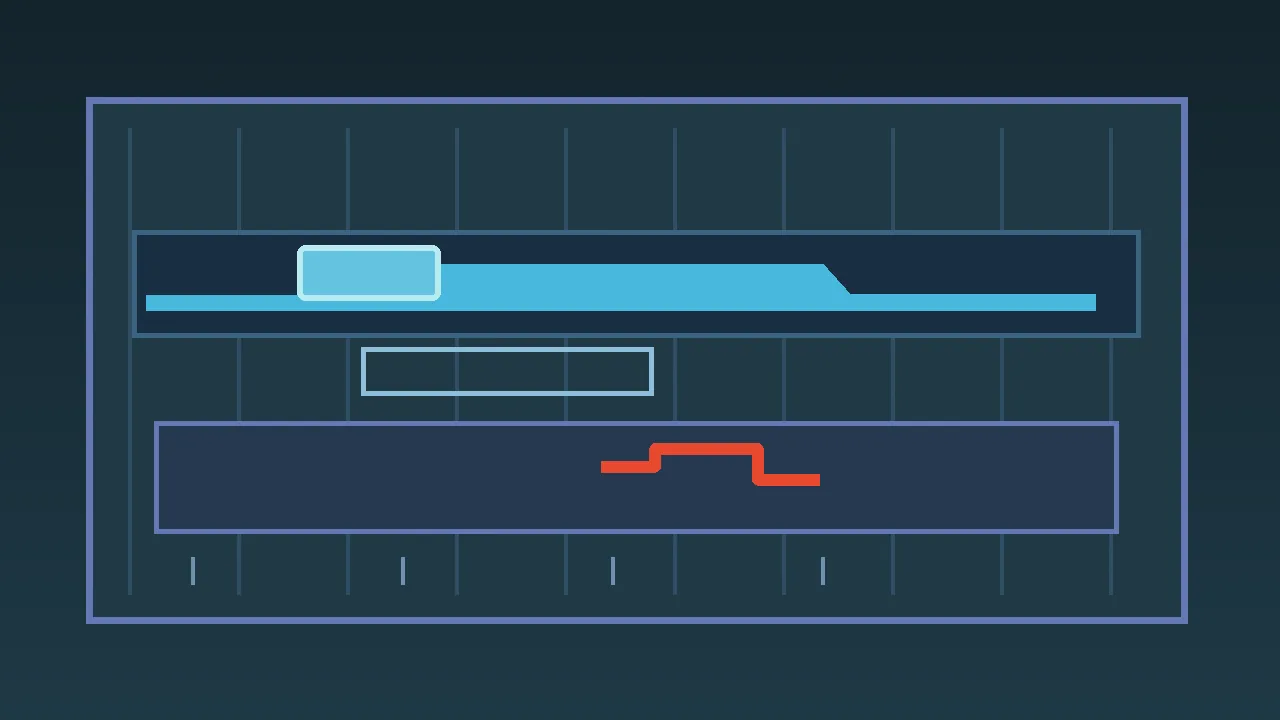
A model group can wait below the output line while a separate condition changes. We initially showed its waiting place as a long dark patch. From the upper view, that patch blended with the area where the next group would enter. We gave it an outline at the entry end and a small corner on its closed side. The side facing the next group could then stay visible while the row sits there. A tester can now identify a place the group can still use and a place that appears available but is already filled. The game uses a few invented units, so the outline has to carry the distinction before any number can help.
Keep the upper reading on its own line
In the frame above the short waiting place, the output from the earlier row remains visible. Put a stable mark directly beneath it and line up the earlier and current parts of that mark. The second row can then appear without making the earlier output hard to find. On the earlier design, the crossing line between them moved with the last arrival. It briefly covered the place that showed why another group had to wait. We drew the line behind the two shapes. That meant the latest row could use its own color and the stopped frame could still show both limits. In The Output That Waits, those shapes give the player a reason to try another release time.
Give a full space a readable end
When the waiting group reaches the boundary, the mark can show that the space is used. An earlier still needs a complete outline so the player can point to a place it could have reached. Those two drawings then give clear answers to different questions. We can show the empty place before asking whether it is now full. A return to the first frame can restore the original group while retaining a result nearby. That gives the player room to decide whether they used the wait or went through the near route too soon. Try changing the time without changing which group entered first. The current border should move less than the row, so it stays recognizable in either picture.
Read the place from the other end of the frame
Begin at the later output mark and move back along the lower strip. We can see where a next group would approach while the earlier one still occupies the dark patch. If a reader calls it an arrow, the entry and stop belong too close to one another. Move the holding place a little below the arrow. A Symbol for the Limit uses a separate indicator to describe why an output keeps waiting after the first turn. The wait border should show a place, and the indicator can show a condition. The next test uses a different group but keeps the same turn label next to the original position.
Let the current position explain a choice
Ask the player where the group goes in the first result, then which part of that waiting space a later group could use. A reasonable next choice may leave a gap instead of moving both rows forward. For that trial keep the earlier result visible while the second position changes. If a reader needs to count several unrelated marks, return to the first sketch and give one of them a clearer shape. We will know the border works if someone can pause the drawing and describe a useful next step with the entry and the far corner in view. Both should leave enough room to see the upper reading at that moment. An earlier label can confirm the time where the next group reaches the newly available position.