
A Symbol for the Limit
Give the limit its own space
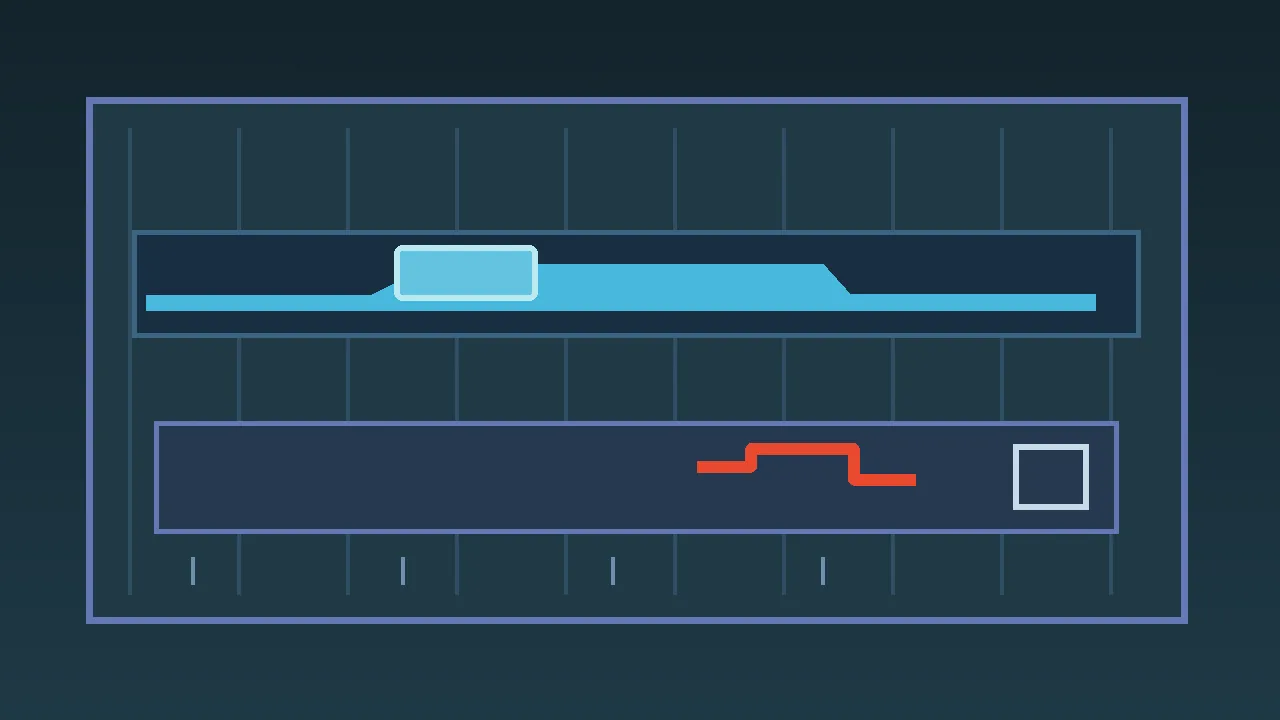
A visual mark for an active condition should be readable even when the latest output is no longer moving. We had used a narrow orange bar on both places. The player could see a value change but could not say whether it referred to the output or the separate strip. We set the control mark on a lower row, offset from the little label that shows the older count. The output stays above it. The drawing can preserve both if the model stops. A past limit has its own border at the same place. That gives a reader a reason to look at the earlier mark before deciding whether another row can enter.
Choose a distinct shape before adding a number
The control strip uses a stepped edge so a reader can point to the part that remains active. The output uses a longer block. On a still the corner of the control shape remains recognizable without choosing a colour. On a narrow screen, put the short label beside that shape and give the output block its own line. We tried putting every state name below the whole drawing. This made the names readable but gave the player fewer direct connections to compare. Bringing both near the point where the state changes gave each group a useful starting place. It is now possible to ask about the older reading without showing the most recent result. Check that in a small still before running the two phases.
Restore both pieces after a pause
The input is stopped in one trial but the control state is still visible below it. In another, the earlier output remains visible while the lower reading changes on the following turn. We want the tester to tell which of those pieces was affected when the stop happened. Before the Line Goes Quiet shows these readings at two different points in the same scenario. If the kind of mark changes when you open the later panel, check whether it still belongs to the same system. An earlier state can remain available in the margin. Its relation to the active step should be easy to trace. Try the same read with the upper change out of view to check whether the limit is clear by itself.
Hold the reader's attention at the right part
Put one change next to the location where a waiting group can use it. If the control strip no longer has room, its step still shows which part is handling a prior reading. The player can see the output reach a different place while the last step holds steady. Our notes in The Buffer Has an Edge examine the place itself, where the earlier row remains while a new one enters. Here we need a word or two beside the constraint to confirm what the shape tells the reader. Keep it close to the relevant row so both diagrams can make sense without asking a person to match two remote labels.
Check the symbol in the next reading
Show a still and ask a tester to point to a current output and the available part of the limit. Then change the time and ask which mark moved. If both answers identify the same place, draw the lower strip in a different part of the frame before naming another value. If the two answers are clear, give the reader another turn in which one mark remains fixed while the other changes. This lets us see whether the shape keeps its role in a useful alternative. Keep a small earlier frame in view after the run so they can say which older reading remained. The next study can address more complex movements after a reader can explain the two symbols at rest.