
What the Pause Leaves Visible
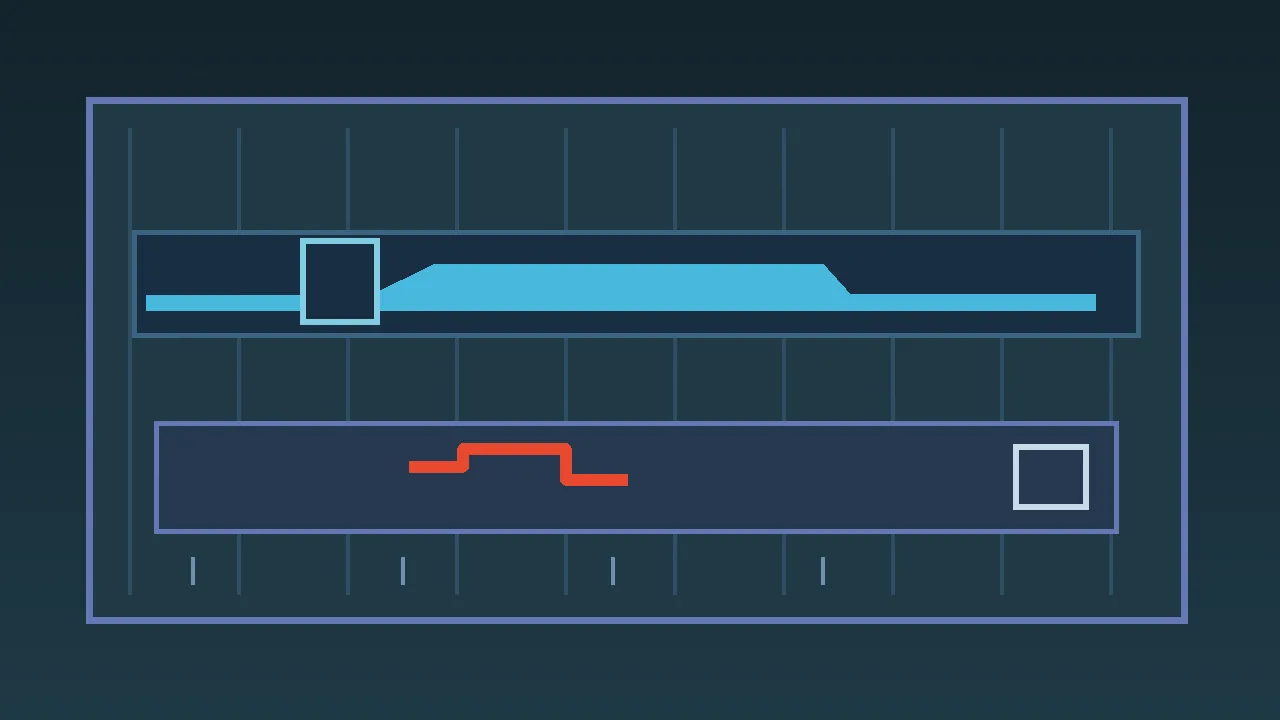
Start with a frame just before the pause
The model has one older reading on the output line. The lower strip shows a condition that will need another turn. We stopped the first prototype by dimming the whole diagram. Somebody could tell the input had stopped, but returning to the frame without the earlier view gave them no way to say which group had finished. We added a snapshot beside the stop position. The new still keeps the output reading and the older limit in different places in the frame. The upper route remains readable after the input dims. A second view now focuses on whether the lower strip will need any more time.
Give the stopped result its own label
A recorded result comes from the turn when the pause happens. Reopening a previous turn requires a different label. Keep that distinction in the drawing until the player makes a change. We tested a button that showed the same word before and after it restored the earlier state. It felt short, but once the result was there a reader did not know which group they could still move. The updated view leaves the old result above the control and labels the active state at the edge. The lower strip returns to its prior reading when the player opens the earlier turn. A useful view lets the tester point to one late effect and the condition that was present before it.
Keep more than one reading available
In Before the Line Goes Quiet, the input can stop while a mark remains active on the lower strip. The output has a recognizable position on the upper route. We can test the earlier view with its own reading, then restore it to change the moment when the last group advances. A stopped result should not lose that group just because the earlier view has reopened. The reader can keep a still beside the current one and compare where the group waited, then choose whether to run one more turn. The same model ends at a point where two results can be seen together. Keep the labels near their own lines before adding another control to change the start.
Give the last picture a useful detail
The pause does not have to show every earlier movement. It can preserve the output and the separate reading beside it. One marked place on the upper path can answer what happened to a row before the stop. One step in the lower strip can answer what remained at the limit afterwards. A Symbol for the Limit explains why we keep their shapes distinct. Those cues should be readable when the latest result is copied to a small view. If the player sees a still first, the captions can give them enough context to name the route they can revisit. We can then ask which place they would try to leave open on a new pass.
Compare the pause after a different first move
For another test, restore the same opening, select a later release and pause before the final group reaches its mark. The earlier reading needs to remain available and the result must show which space still has room. Try both stills on the same screen, then ask what the pause retained. If a reader suggests a new move, point to the first place the choice can affect and see whether they recognized the earlier turn. We can choose to keep the cue if it works both before and after the input stops. The later discussion can then turn to a result that requires another scale, after the smaller model has a clear job for each of its two readings.